Hazard-to-boot mapping
We translate job notes into footwear questions: toe impact and compression, EH marking needs, metatarsal exposure, wet surfaces, ladder contact, and expected walking distance.
Safety footwear ordering often begins with scattered employee preferences, urgent replacement needs, and unclear standards language. Wolverine brings those conversations into a guided service flow. We help your team separate must-have features from comfort preferences, compare steel toe and composite toe choices, review waterproof and insulated needs, and create a first shortlist that purchasing can actually manage.
The service is written for supervisors, safety coordinators, HR teams, and procurement buyers who need practical help before placing a group order. It does not replace your workplace hazard assessment, but it does organize the questions that usually slow down boot selection.
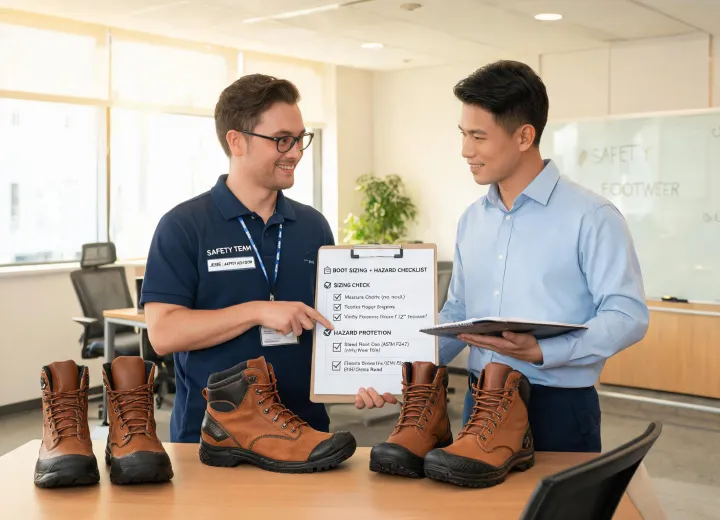
We translate job notes into footwear questions: toe impact and compression, EH marking needs, metatarsal exposure, wet surfaces, ladder contact, and expected walking distance.
Share your crew count and historical sizes. We help plan a starter curve for common men's and women's sizes, width needs, seasonal hires, and replacement stock.
For department issue windows, we prepare a cleaner quote path with eligible styles, estimated quantities, delivery priorities, and a simple decision sheet for crew leads.
We document practical care reminders, inspection cues, and reorder timing so employees know when a boot has moved from worn-in to ready for replacement.
Boot programs move faster when common questions are addressed early. These notes are intentionally plain-spoken so a supervisor can share them with a crew without turning a footwear rollout into a technical manual.
Include the job roles, crew count, common sizes, required toe protection, weather exposure, and any comfort complaints. A Wolverine advisor will return with practical questions and a clearer path for your quote review.