The Day the Fire Extinguisher Powder Took Over
It was a Tuesday afternoon. One of our maintenance guys accidentally discharged a fire extinguisher near the warehouse entrance. White powder everywhere. What followed was a two-hour cleanup involving five people, shop vacuums, and a lot of grumbling. But the real problem came later: the powder had caked into the stitching of several workers' boots. Three pairs had to be replaced because the material just wouldn't let go—the powder mixed with sweat and turned into a gummy mess.
That was the moment I started questioning our whole approach to safety footwear. I'm the office administrator who handles all PPE orders—roughly $80,000 annually across 400 employees at three locations. And for years, I'd been buying the cheapest steel-toe boots I could find. My thinking was simple: budget constraints are real, and a boot is a boot. Right?
Not all steel toe boots are created equal
Wrong. What I didn't realize was that the lowest upfront cost often came with hidden trade-offs: uncomfortable soles, poor waterproofing, and materials that absorbed everything from oil to that fire extinguisher powder. If you've ever had to explain to your VP why you need to replace 15 pairs of boots six months early, you know the feeling.
The Research Phase: Wolverine vs. Carhartt vs. Everything Else
After that powder incident, I started looking seriously at premium brands. Two names kept coming up: Wolverine and Carhartt. Both make solid steel toe boots. But I needed to understand what we were really paying for.
Here's what I found (based on publicly listed prices and spec sheets as of early 2025):
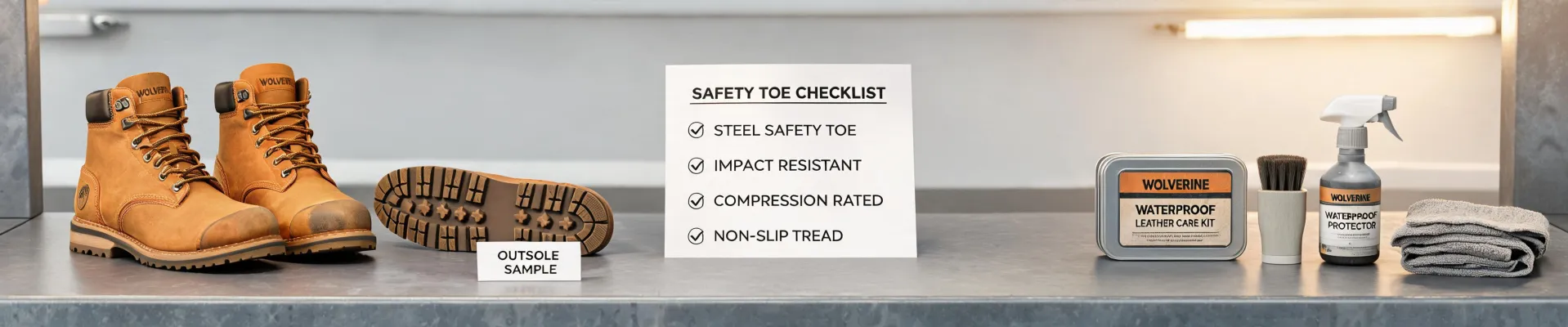
- Wolverine Floorhand Work Boots (5" black steel toe): roughly $120–$150 per pair. Features: ASTM F2413-18 rated, waterproof membrane, slip-resistant outsole, Durashock® heel pad for impact absorption.
- Carhartt Steel Toe Boots (6" rugged flex): ~$130–$170. Also ASTM-rated, with Goodyear welt construction and oil-resistant sole.
- Budget no-name boots (various brands): $65–$90. No ASTM certification visible, thin PVC outsoles, no waterproofing claims.
I went back and forth between Wolverine and Carhartt for about two weeks. The Carhartt boots had a slightly tougher look, but the Wolverine Floorhand had a wider toe box and better reviews for all-day comfort—critical for guys on their feet ten hours a day. And honestly, the black-on-black style looked professional enough for both warehouse and office visits.
Why I chose Wolverine (and why it was hard)
Making the decision, I kept second-guessing. What if the durability didn't match the hype? What if my finance director questioned the 30% higher per-pair cost? The two weeks until the first test order arrived were stressful. Hit 'confirm purchase' and immediately thought: 'Did I make the right call?'
But I stuck with a principle I'd learned from managing 60–80 orders annually: total value matters more than unit price. A boot that lasts two years instead of one effectively halves your annual cost—even if it costs 50% more upfront. Plus, the waterproofing meant fewer foot issues and less time wasted on cleaning powder, mud, and water. That $200 savings from buying cheap? It turned into a $1,500 problem when three employees filed workers' comp claims for wet-feet-related dermatitis.
Real Results: The Wolverine Trial
We ordered 30 pairs of the Wolverine steel toe boots (black) in various sizes for the warehouse team. After three months, here's the feedback:
- “My feet don't hurt at the end of the day.” – almost everyone
- “The Durashock sole actually absorbs shock on concrete floors.”
- “Wiping off fire extinguisher powder? No problem—just a damp cloth. The smooth leather doesn't trap anything.”
That last point was a game-changer. We also paired the boots with transition safety glasses for workers who moved between indoor and outdoor areas. The glasses automatically tinted in sunlight, reducing the need for separate prescription clip-ons. Another hidden value win.
How to clean fire extinguisher powder off your work boots
Since several readers asked about this after I posted on our internal knowledge base, here's the quick guide:
- Brush off loose powder immediately with a stiff brush.
- Mix warm water with mild dish soap (don't use harsh solvents—they damage leather).
- Wipe the boot surface with a damp cloth, paying extra attention to creases and stitching.
- Let air dry away from direct heat. Stuff with newspaper to absorb moisture.
- Apply a leather conditioner once fully dry to restore oils.
Boots with smooth leather (like Wolverine's) are way easier to clean than nubuck or suede. That alone justified the upgrade for our environment.
Bottom Line: What I Wish I'd Known Earlier
From the outside, it looks like PPE purchasing is just about comparing prices on a spreadsheet. The reality is that the cheapest option often carries hidden costs—lost productivity, discomfort complaints, higher replacement frequency. Value over price isn't just a slogan; it's a metric.
To be fair, Carhartt makes excellent boots too. But for our specific needs—workers who walk on concrete, deal with occasional chemical spills, and need boots that clean easily—the Wolverine Floorhand outperformed. I'm not saying every company should switch. I'm saying that my next order will be more Wolverine, and I'm finally sleeping better knowing my team's feet are protected.
Take it from someone who once bought 100 pairs of $70 boots: you get what you pay for. And sometimes, paying more upfront is the cheapest thing you can do.