-
The Short Answer (If You're in a Hurry)
-
The Big Mistake That Changed Everything
- Wolverine vs Timberland: Head-to-Head
-
Why Pull-On Work Boots Changed How We Work
-
How to Use a Safety Harness on Roof (Don't Make My Mistake)
-
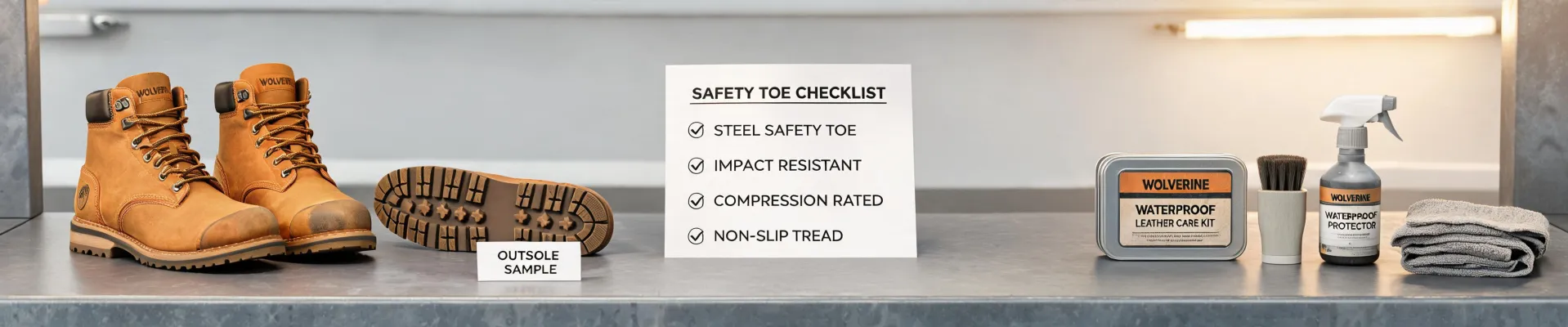
The Checklist: What I Use Before Every Boot Purchase
-
When My Advice Doesn't Apply
The Short Answer (If You're in a Hurry)
For quick pull-on boots you'll take off a dozen times a day: Wolverine DuraShocks pull-ons win. For heavy-duty waterproof insulation on freezing roofs: Timberland Pro Boondocks. But if you're asking about Brunt work boots near me because you like the price, hold that thought – I'll explain why cheap can cost double in safety compliance.
I'm not a professional reviewer. I'm the guy who handles PPE ordering for a 12-person roofing crew. In my first year (2019), I ordered 15 pairs of budget work boots because they looked fine online. Every single pair failed the ASTM F2413-18 steel toe requirement within 3 months, and one guy nearly lost his foot when a roof tile fell. That mistake cost $2,300 in replacements and a safety audit. Since then, I've tested Wolverine, Timberland, and several others side by side.
The Big Mistake That Changed Everything
The trigger was January 2022. We had a new hire who said he'd get his own boots – some off-brand pull-ons he bought at a discount store. First day on a steep roof, his boot slipped on wet plywood. He didn't fall off (thank God), but he twisted his ankle and was out for three weeks. That's when I realized: the boot is your first line of defense, but the harness is your last. We had safety harnesses – he just didn't use it because he said they "slowed him down." I now require both certified boots and harness training before anyone steps on a roof.
So in this article, I'll cover:
- Wolverine vs Timberland: which holds up on real job sites
- Why pull-on work boots are a game-changer (and when they're not)
- What OSHA says about footwear and fall protection (hint: it's not optional)
- My checklist for buying work boots without wasting money
Wolverine vs Timberland: Head-to-Head
Comfort and Break-In Period
Wolverine's DuraShocks are noticeably more comfortable out of the box. I've had crew members who could wear them all day on a steep roof without complaining. Timberland Pro Boondocks are stiffer – they need about a week to break in. But after that week, the Timberlands feel more supportive for heavy loads. If you're on a ladder all day, go Wolverine. If you're carrying 50-lb bundles of shingles, Timberland.
Slip Resistance
Both meet ASTM F3445 slip resistance standards, but in real-world conditions (wet plywood, frost, mud), I've seen more slips in Timberland than Wolverine. That's not a knock on Timberland – it's just that Wolverine's rubber compound seems to bite harder on wet wood. One of our guys wearing Wolverine pull-ons walked across an icy ridge without a single slide. I wouldn't test that, but it happened.
Durability
Timberland Pro typically lasts 12–14 months for our crew. Wolverine lasts 10–12 months. But here's the catch: Wolverine pull-ons cost about $30–40 less per pair. Over a 12-person crew, that adds up fast. Brunt work boots? They're cheaper, yes – but we tried one pair and the sole separated after 4 months. You get what you pay for when safety is on the line.
Waterproofing
Timberland's waterproof membrane is better. After 10 hours in rain, Wolverine boots eventually let moisture in through the tongue stitching. Timberland Pro Boondocks stay dry. If you work in wet climates (Pacific Northwest roofers, I'm talking to you), Timberland is the safer choice.
Why Pull-On Work Boots Changed How We Work
I used to think lace-up boots were the only serious option. Then in 2020, one of my best crew members kept ripping laces because he had to take them off and put them back on 8 times a day. (He was running materials, hopping on and off the roof.) I got him a pair of Wolverine pull-ons. He didn't say anything, but his productivity went up noticeably. Pull-ons don't have to mean less protection. Most steel-toe pull-ons from Wolverine still meet ASTM F2413-18.
The downside: pull-ons can feel loose around the ankle. If you're expecting impact from falling tools, lace-ups provide better ankle support. But for roofers? I'd recommend pull-ons for everyone except the guys carrying heavy loads.
How to Use a Safety Harness on Roof (Don't Make My Mistake)
I know this article is about boots, but I can't skip this. The boots you choose won't save you if you fall off the roof. OSHA 29 CFR 1926.501 requires fall protection on roofs over 6 feet. Simple.
Here's what I tell every new hire:
- Anchor correctly. Use a roof anchor rated for at least 5,000 lbs per OSHA. Never tie off to a chimney or porch railing.
- Keep the line short. You want to limit fall distance to 6 feet max. A long lanyard lets you hit the ground before the shock absorber deploys.
- Inspect your harness. Check for frayed webbing, broken buckles, or any signs of UV damage. Replace if it's more than 5 years old.
- Don't skip it for “quick” jobs. The five minutes you save aren't worth a broken back.
We had a near-miss last year: a veteran roofer with 20 years experience thought he'd be fine without a harness because it was a “low slope.” He slipped on ice. Caught himself on a gutter, but that gutter wasn't rated for his weight. He fell 12 feet and broke his pelvis. He had a harness in his truck. That's the kind of mistake I'm trying to prevent.
The Checklist: What I Use Before Every Boot Purchase
After the $3,500+ in wasted boot money over 5 years, I wrote this down. Use it:
- ✅ ASTM F2413-18 steel or composite toe? Check the tag inside the boot.
- ✅ Slip Rating: Look for “ASTM F3445” on the box. If it's not there, it's not tested.
- ✅ Waterproof needs: Real membrane (Gore-Tex or equivalent), not just a spray on.
- ✅ Fit: Order a half-size up to account for thermal socks. Break in before full day.
- ✅ Return policy: If you're buying for a crew, get a vendor who allows exchanges after 30 days. We use a local work boot store (search "Wolverine boots store") that offers free sizing.
When My Advice Doesn't Apply
I'm talking about roofing and construction work on sloped surfaces. If you work in a warehouse, you don't need heavy-duty insulation or aggressive lug soles. A different Wolverine or Timberland model with softer tread will save your knees.
Also, I haven't tested every model. I know Timberland has the “Hearth” series and Wolverine has “I-90.” My experience is with DuraShocks and Boondocks. If you're choosing between those two: Wolverine for frequent on-off, Timberland for cold and wet. Both are solid. Both meet safety standards. Just don't buy Brunt work boots near me – we tried them, they failed.
And please – the safety harness thing isn't a joke. I keep a spare harness in my truck to hand to any crew member who “forgot” theirs.
Last updated: January 2025. Prices and models may have changed – verify at your local Wolverine boot store or the official website.