-
The Questions I Actually Get
-
Is Ariat FR clothing worth the premium for a full crew?
-
How do Ariat Groundbreaker work boots hold up for daily industrial use?
-
Ariat or Nike tactical boots for our security team?
-
Do we actually need insulated coveralls for men in our climate?
-
Why does my fire alarm randomly go off?
-
Is the Ariat name worth it, or should I go generic?
-
What's one gear mistake office buyers make all the time?
The Questions I Actually Get
I handle purchasing for a company that keeps roughly 200 people in safety gear across two sites. When people find out I manage the Ariat orders, the FR clothing, and the random-facilities-stuff, the questions come fast. These are the ones I hear most often—answered the way I'd answer a coworker in the hallway, not the way a catalog would.
- Is Ariat FR clothing worth the premium?
- How do Ariat Groundbreaker boots hold up?
- Ariat or Nike tactical boots for our security team?
- Do we actually need insulated coveralls?
- Why does the fire alarm randomly go off?
- Is the Ariat name worth it, or should I go generic?
- What's one gear mistake buyers make all the time?
Is Ariat FR clothing worth the premium for a full crew?
Depends on what you're comparing it to. Ariat's FR line—shirts, jeans, bibs—sits in the mid-to-upper tier for pricing, roughly $70–130 per shirt and $100–160 per pair of FR jeans based on publicly listed retail prices as of early 2025. If you're outfitting ten people, that adds up.
What you're paying for is compliance plus wearability. Their FR garments are designed to meet NFPA 70E and NFPA 2112 standards, which matters if you've got electricians or anyone near arc-flash hazards. The ARC ratings on their CAT 2 pieces are documented, not implied. That's a big deal for compliance paperwork—OSHA 1910.132 requires you to verify PPE adequacy, and "the vendor said it's fine" doesn't cut it.
Here's my honest take: if your crew wears FR daily, Ariat's fit and durability justify the price. If they wear it twice a year for a site visit, buy the cheaper compliant option and put the savings into something else. I don't have hard data on failure rates across brands, but anecdotally, the Ariat FR shirts we bought in 2022 are still in rotation. The off-brand set from the same year got replaced in 2024.
How do Ariat Groundbreaker work boots hold up for daily industrial use?
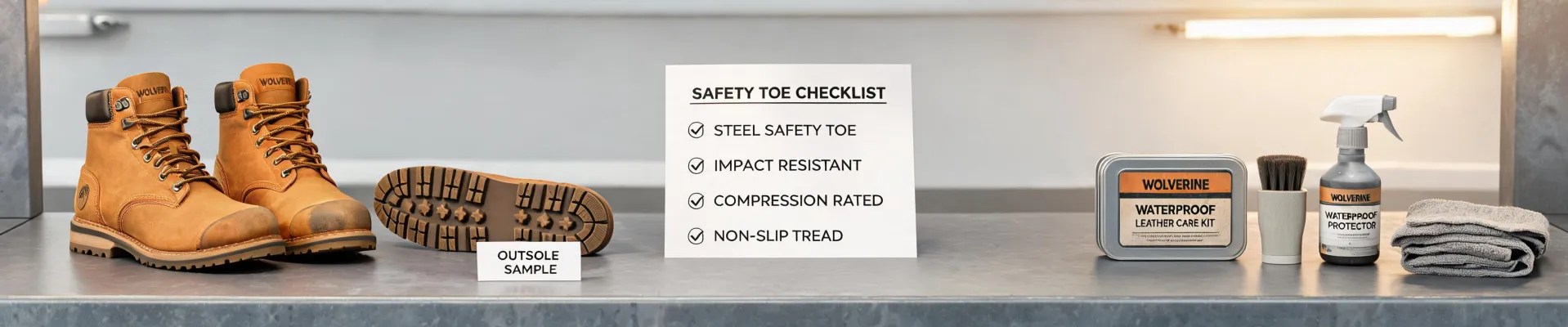
Pretty well, with caveats. The Groundbreaker line is ASTM F2413-18 compliant—that's the standard for impact and compression resistance in safety toe footwear. Steel toe or soft toe depending on the model. The ATS footbed is the real selling point for people who are on their feet eight to ten hours.
Where they struggle: extreme conditions. If your people are in concrete pours or heavy chemical exposure, you'll want a more specialized boot. Groundbreakers are work boots, not hazmat boots. For general warehouse, light construction, or facility maintenance work, they're solid. Pricing runs about $130–180 depending on the specific model and safety toe configuration.
One thing I wish I'd tracked more carefully: break-in complaints. We switched 30 people to Groundbreakers in 2023 and got maybe four or five "these hurt for the first week" comments. Not a deal-breaker, but worth knowing if you've got people who won't tolerate a break-in period.
Ariat or Nike tactical boots for our security team?
Different tools for different jobs. This isn't a "which is better" question—it's a "which fits the assignment" question.
Nike tactical boots are built for law enforcement and military contexts: lighter weight, side-zip access, athletic last, designed for running and quick movement. If your security team is doing patrol rounds, standing posts, or response work, they make sense. The trade-off is protection—tactical boots typically prioritize mobility over industrial hazard resistance.
Ariat work boots, Groundbreakers included, are built for industrial environments. Heavier, more structured, with safety toe options and better protection against punctures and compression. If your security team is walking a manufacturing floor or a construction site, that protection matters more than saving four ounces per boot.
My rule of thumb: match the boot to the hazard, not the brand. Buy Nike for the patrol team, Ariat for the plant-floor team. Don't force one boot to do both jobs—you'll end up with people who are either unprotected or uncomfortable. Often both.
Do we actually need insulated coveralls for men in our climate?
Depends on your winter. OSHA's cold stress guidance kicks in meaningfully below 40°F, especially with wind chill. If your people are working outdoors or in unheated spaces for more than an hour at a time in those conditions, insulated coveralls aren't a luxury—they're basic cold-stress mitigation.
The mistake I see: buying coveralls as a blanket solution. Insulated coveralls for men work great for stationary or low-activity outdoor work. For high-activity work, they trap sweat and you end up colder. Layering systems—base layer, mid layer, shell—often work better for active crews.
Cost context: a decent pair of insulated coveralls runs $80–200 depending on brand and insulation rating. Compare that to lost productivity from cold hands and slower work—or a workers' comp claim from a slip on ice because someone was rushing to get back inside. The math usually favors buying the gear.
Why does my fire alarm randomly go off?
This is the question that makes me want to put my head through a wall. Not because it's hard—because it's usually preventable.
NFPA 72 covers installation and maintenance, but most random alarms come down to a handful of causes:
- Dust and debris in the sensor chamber. Construction dust, HVAC blowback, even paper dust in office environments.
- Humidity or steam. Bathrooms, kitchens, and areas near industrial processes.
- Insects in the sensing chamber. Sounds absurd. Happens constantly.
- Low batteries in battery-backed units—though those usually chirp rather than full alarm.
- Placement issues. Too close to a kitchen, a shower, or an HVAC vent.
The most frustrating part: the same alarm going off three times in a month and nobody checking the sensor. You'd think a $30 cleaning or a $50 relocation would be the obvious fix, but somehow it becomes a "facilities will get to it" loop. After the third 2 a.m. call from the alarm company, I started requiring a written sensor inspection log. Problem solved in two weeks.
If it's a photoelectric sensor and it keeps false-alarming, check for dust first. If it's ionization and it's near a kitchen, that's your answer. Don't replace the whole panel before you've cleaned the sensor.
Is the Ariat name worth it, or should I go generic?
I have mixed feelings about this one. On one hand, brand premium is real—you're paying 20–40% more for the Ariat logo on a comparable-spec boot or shirt. On the other hand, the brand carries accountability. When we had a stitching failure on a batch of Groundbreakers, Ariat replaced them without a fight. Generic replacements are a coin flip.
My compromise: brand-name for daily-wear items that affect morale and retention—boots, FR shirts—and generic or mid-tier for items that are truly disposable or rarely used. The people who wear the gear every day notice the difference. The people who grab a pair of gloves twice a month don't.
Bottom line: don't pay for the logo. Pay for the return policy, the compliance documentation, and the fact that your crew won't complain about their feet at 3 p.m. If Ariat delivers that, the premium is worth it. If it doesn't, switch.
What's one gear mistake office buyers make all the time?
Buying the right size in the wrong fit.
This sounds trivial. It isn't. We spent $1,800 on FR clothing in 2023 that half the crew wouldn't wear because the shirts ran slim and the jeans ran long. That's $1,800 of compliant gear sitting in a closet because nobody checked the fit chart against actual body types.
Now I order one sample of everything before committing. One shirt, one pair of jeans, one boot in the most common size. Have two or three people try it. Then order. It adds a week to the timeline and saves a month of "these don't fit" emails.
Simple. Not easy. But simple.