-
Peltor 3M Hearing Protection—Great, But Not Every Peltor Earmuff Fits Every Job
-
Bifocal Safety Glasses—The Lens Matters More Than You Think
-
Safety Shoes—Where I Wasted Real Money
-
Fall Protection Measures—This Isn't a Purchasing Problem, It's a Process Problem
-
So Why Do I Still Buy Peltor If It's Not Always Perfect?
-
Bottom Line: Don't Ask What's Best—Ask What Fits
Here's the thing: after five years buying safety gear for a 200-person manufacturing shop, I live by one rule—anyone who claims a piece of safety equipment is the absolute best choice is either selling it or hasn't used it long enough.
I get it. Purchase committees want a clean answer. "What's the best ear protection?" "What are the best safety shoes?" The honest answer is usually "it depends." And "it depends" doesn't fly in a purchasing meeting.
So I've learned to say it a different way: I'll tell you what I bought, why I bought it, and—this is the important part—when I would buy something else. That's the approach I use for Peltor hearing protection, bifocal safety glasses, safety shoes, and fall protection measures. Honest limitations, every time. Because a half-truth about gear is worse than no recommendation at all.
Peltor 3M Hearing Protection—Great, But Not Every Peltor Earmuff Fits Every Job
Three years ago, our facility team came to me saying guys in the metal fabrication bay were complaining about ringing ears. I looked online and found Peltor everywhere. Peltor X5A, Peltor Optime 105, Peltor Sport Tactical 500 earmuffs. High NRR ratings, strong brand recognition, and the price wasn't ridiculous.
We bought a batch of Optime 105s. They worked. The complaints stopped. The NRR on those is 27 dB, which matters when you're around 95-100 dB of saws and grinders all day (according to NIOSH, every 3 dB increase in noise cuts the safe exposure time in half—so a 27 dB reduction is the difference between hours of safe use and minutes).
Then our shooting club—yes, we have one, it's a manufacturing town—asked about the Peltor Sport Tactical 500 earmuffs. I bought a dozen.
They're... fine. Here's the catch: the Sport Tactical 500 is built for shooting. It has an ambient microphone that amplifies low-level sound (footsteps, voices) while suppressing gunshots. On a range, that's incredible. In a metal shop? That mic was a nuisance. Guys kept turning the volume down or just switching it off. They paid extra for a feature they didn't use.
So here's my point: Peltor 3M hearing protection is as good as it gets for industrial and tactical use. But not every Peltor earmuff is right for every situation. The Sport Tactical 500 is the best shooting earmuff I've come across. If you're on a range, it's ideal. If you're wearing it for eight hours of metal grinding, that ambient microphone just gets in the way. Stick with the Optime 105 for the shop floor.
Bifocal Safety Glasses—The Lens Matters More Than You Think
People assume that because safety glasses meet ANSI Z87.1, they're all the same. They're not.
We had workers who needed to read drawings and fine print while wearing eye protection. So I sourced bifocal safety glasses. Sounded simple—just get safety glasses with magnified lenses, right?
Here's the reality: not every bifocal safely glasses works for extended wear. Some have a harsh dividing line between the near and far zones. I had one guy try a pair for a day and he said his eyes felt strained after about seven hours. Others use cheap lens coatings that warp under shop-floor heat.
We ended up with two different models: one for people who read prints all day (a 2.5x magnification with an adjustable nose bridge), and a lower-magnification pair for people who mostly work with their hands but need to glance at small labels occasionally. If you buy bifocal safety glasses purely on price, you'll probably get it wrong—and you won't find out until six weeks later when your team stops wearing them.
Safety Shoes—Where I Wasted Real Money
I took a bath on safety shoes once. Let me tell you about it.
First order: 40 pairs of generic "safety sneakers." Good price. Decent reviews. Four months later, 15 pairs were falling apart. One warehouse guy dropped something on his foot—no fracture, but three days of lost work and an incident report that took me way too long to fill out.
The "data" said those shoes had 4.5-star ratings and 3,000+ reviews. My gut said the whole thing felt risky—nobody on my team had ever heard of the brand. But I went with the numbers because they were right there on the screen.
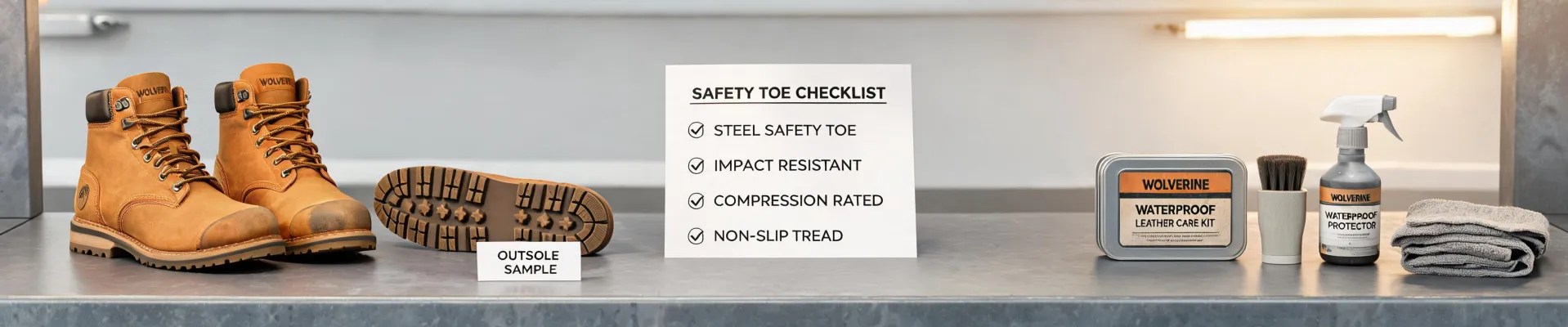
Looking back, I should have checked ASTM F2413 compliance and impact ratings instead of consumer reviews. Safety shoes aren't fashion items. A review can't tell you whether the toe cap will hold up to a 75-pound impact.
Since then, I only buy shoes with documented ASTM F2413 certification and clear impact ratings. Yes, it costs more. No, I don't regret it.
Fall Protection Measures—This Isn't a Purchasing Problem, It's a Process Problem
"What are fall protection measures?" I get this question from people outside the safety world, and the honest answer is: it's not "buy a harness and call it a day."
We had a contractor tour our warehouse mezzanine and ask why we didn't have proper guardrails installed. Turns out, we'd had a gap in our fall protection for a while. I hadn't bought any fall protection equipment because I didn't know we needed it. That's on me.
Not a product problem. A process problem. We didn't have a way to identify fall hazards.
Fall protection measures include guardrails, safety nets, personal fall arrest systems, positioning systems, ladder safety systems—and most importantly, knowing which one applies to your situation (per OSHA, falls are among the leading causes of workplace fatalities in construction, with hundreds of deaths each year).
If you're asking "what are fall protection measures?" the real answer is: this is an engineering question, not a purchasing question. Before you buy anything, get a safety consultant to walk your facility.
So Why Do I Still Buy Peltor If It's Not Always Perfect?
Fair question. If I'm saying Peltor isn't always the answer, why does it keep showing up in my orders?
Because in about 80% of our cases, it is the right answer. The NRR ratings are solid, the build quality holds up, and the brand recognition means our guys actually trust them to work—which matters more than you'd think when you're trying to get people to wear hearing protection consistently.
I buy Peltor because when the situation fits, it delivers every time. And I'm honest about when it doesn't fit so people can make an informed call instead of learning the hard way three months in.
Bottom Line: Don't Ask What's Best—Ask What Fits
Don't ask me what the "best" safety gear is. Ask me what's right for your people, your noise levels, your budget, and your compliance requirements.
Sometimes the answer is Peltor hearing protection, the Sport Tactical 500 earmuffs if you're on a range, bifocal safety glasses matched to the actual reading task, ASTM-rated safety shoes, and a real conversation about fall protection measures with someone qualified to assess your site.
Sometimes it isn't. If you need all-day industrial hearing protection, the Sport Tactical 500 might not be your pick. If you only need bifocal safety glasses for occasional label-reading, you don't need the premium pair.
Honest limitations beat blind recommendations. Every time. That's how I buy, and it's how I wish more of us in procurement would talk about this stuff.
Disclaimer: Product names and standards mentioned reflect general industry references. Verify current ANSI, ASTM, and OSHA requirements for your specific industry and location. Pricing and product availability vary by vendor.