The Day I Learned Cheap Boots Are Never a Bargain
It was February 2022. I’d just been put in charge of PPE procurement for our 12‑person warehouse crew. My boss handed me a tight budget and said, “Get us some steel‑toe boots that don’t fall apart in three months.” Simple enough, right? I went online, typed “work boots near me,” and grabbed the first deal I saw — 20 pairs of a well‑known brand (let’s just say it rhymes with Caterpillar) for about $65 each. Basically, I thought I was being smart.
Spoiler: I wasn’t. That decision cost us roughly $1,100 in returns, lost productivity, and one very unhappy worker who nearly filed a safety complaint. Here’s how it all went down — and how I eventually landed on Wolverine’s T‑Bone series, plus the break‑in method that actually works.
The First Mistake: Ignoring the Break‑In Reality
I’d never owned leather work boots myself. I figured you just lace them up and go. But when the crew tried those budget boots on Day One, three guys immediately complained about heel blisters. By Day Three, two more were limping. I thought, “Maybe they’re just not used to safety footwear.” So I told them to tough it out — classic rookie move.
Honestly, I should have known better. Leather work boots need a proper break‑in. The cheap pair I bought had stiff leather and zero cushioning. The result? Five out of twelve workers stopped wearing them within a week. They started wearing old sneakers instead, which is a huge safety violation. We had to pull those guys off the floor until we sorted out the footwear issue.
The Wake‑Up Call: A $200 Return Fee and a Lesson Learned
I returned the unused pairs — 15 of them — but the vendor charged a restocking fee of 15%, plus I covered return shipping. That came to about $200 wasted. Then I had to buy replacements under time pressure. That’s when I started actually researching work boots instead of just comparing prices.
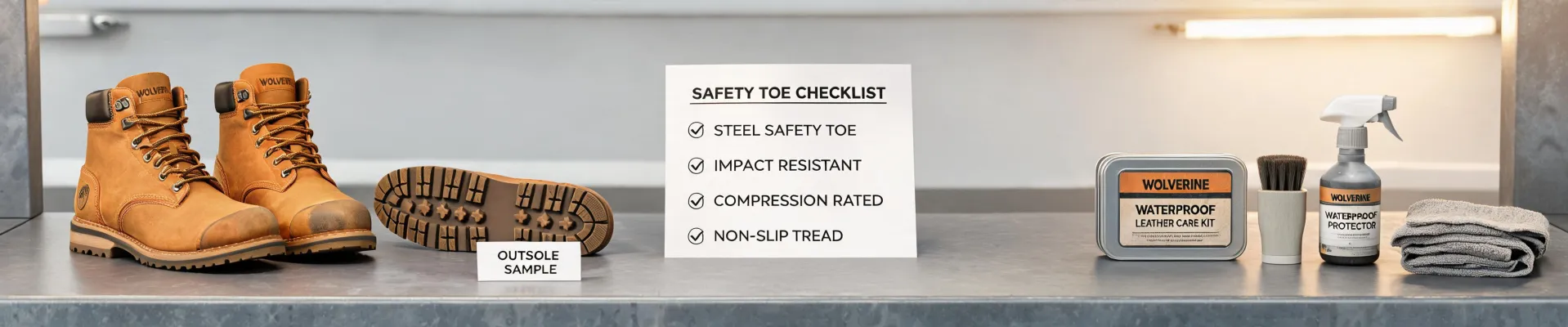
I spent hours reading reviews and talking to a safety consultant. He told me something that stuck: “An informed customer asks better questions and makes faster decisions.” He recommended I look at Wolverine’s T‑Bone line, specifically the men’s work boots with DURA technology. I ordered three different sizes from a local distributor to test them myself.
Why Wolverine T‑Bone Worked for My Crew
The first thing I noticed: the leather was softer out of the box. Not flimsy — just more pliable. The DURA shock absorption actually felt different when I walked on concrete. We bought 12 pairs for the crew, and this time only one guy needed a half‑size exchange. But still, we had to break them in properly.
My Break‑In Routine (That Actually Works)
Here’s where the real learning happened. After the first disaster, I developed a step‑by‑step break‑in process that I now swear by:
- Start with short wear sessions. I told the crew to wear the new boots for only 2 hours on the first day, then 4 hours on day two, gradually increasing to full shifts by day five.
- Use leather conditioner. I applied a thin layer of mink oil to the boots before the first wear. It softens the leather and prevents cracking.
- Walk on varied surfaces. We took a 15‑minute walk on gravel, concrete, and grass each day to help the soles flex naturally.
- Heat trick (careful!). For stubborn spots, I used a hairdryer on low heat to warm the leather, then wore the boots immediately to mold them to the foot. Don’t overheat — you can damage the glue.
- No shortcuts. No soaking in water, no freezing (that’s a myth). Patience is the real deal‑breaker.
By the end of two weeks, every guy on the crew said their Wolverine T‑Bones felt like “wearing slippers with steel toes.” That’s the result you want.
The Cost Breakdown: Compare Before You Buy
To give you a concrete picture, here’s what I found when I checked prices as of January 2025 (source: Wolverine’s official site and major online retailers):
Wolverine Men’s T‑Bone Work Boot (steel toe, waterproof): $130–$160 (varies by width and color).
Compare that to budget brands at $60–$80, but factor in replacement frequency: the cheap pair lasted 4 months; the Wolverine pair is still going strong after 18 months.
If you’re searching for “wolverine work boots near me,” check local boot stores or authorized dealers — sometimes they offer a break‑in guarantee where you can return unworn boots within 30 days. That’s a safety net I wish I’d had for my first purchase.
A Note on Other Brands (No Hate, Just Facts)
I’ve also tried Caterpillar work boots and DeWalt work boots on different projects. They’re decent options for light duty or occasional use. But for daily heavy lifting in a warehouse, the Wolverine T‑Bone series offers better shock absorption and a more comfortable arch support — at least in my experience. Your mileage may vary, especially if you work outdoors in wet conditions.
What I Wish Someone Had Told Me
Looking back, the biggest mistake wasn’t choosing the wrong brand. It was assuming I knew enough. I didn’t understand break‑in requirements, didn’t verify the return policy, and didn’t involve the crew in the decision. Now I have a simple checklist before any boot purchase:
- ☐ Check ASTM F2413‑18 rating (required for steel toes)
- ☐ Read at least 10 user reviews (filter by “break‑in”)
- ☐ Buy from a vendor with a 30‑day comfort guarantee
- ☐ Order a half‑size larger for thick socks
- ☐ Plan a 5‑day gradual break‑in schedule
Take this with a grain of salt — I’ve only purchased work boots for a 12‑person crew over three years. If you’re managing a 100‑person site or working in extreme cold, your experience might differ significantly. But the core lesson stays: investing time upfront saves money and frustration later.
Plus, an informed customer makes faster decisions — and that’s a win for everyone.