-
There’s no “best” work boot – only the best for your scenario
-
Scenario A: The all-day concrete walker (warehouse / factory floor)
-
Scenario B: The outdoor worker (construction / site rough terrain)
-
Scenario C: The seasonal / occasional user (maintenance, inspection, light duty)
-
A quick detour: other PPE you might be buying
-
How to wash work boots (and why it matters for longevity)
-
How to decide which scenario you’re in
There’s no “best” work boot – only the best for your scenario
If you’ve been tasked with buying work boots for your crew (or just for yourself), you’ve probably noticed the endless options: steel toe vs. composite toe, lace-up vs. pull-on, traditional leather vs. waterproof. As a procurement manager who’s tracked over $180,000 in safety footwear spending across six years, I can tell you one thing for sure: the cheapest pair upfront is rarely the cheapest over a year.
What I’ll do here is break down the three most common work-boot scenarios I’ve seen across warehouses, construction sites, and manufacturing floors. Then I’ll help you figure out which bucket you fall into – and which Wolverine boot (or type of boot) makes the most sense.
Scenario A: The all-day concrete walker (warehouse / factory floor)
If your team spends 8–10 hours a day on hard, unforgiving surfaces, you need a boot that prioritizes cushioning and slip resistance. The single biggest mistake I see is buying the cheapest steel toe boot available – sure, it saves $20 per pair, but within three months people complain about foot fatigue and you’re replacing them before the year is out.
What I’d recommend: Wolverine’s Multishox line. They use an energy‑return midsole that actually reduces fatigue. I put a pair on my toughest floor crew in Q2 2024, and the feedback was night and day. The Wolverine Multishox steel toe boots with the DuraShocks® S3 comfort system are my go‑to here. (Should mention: the slip‑resistant outsole is ASTM N78‑rated – I verified that by checking the manufacturer spec sheet; not my own lab test.)
Total cost of ownership? The Multishox boots run about $170–$210 per pair (prices as of May 2025 when I last ran a quote). That’s $40–$50 more than a basic steel toe. But if they last eight months instead of four, you actually save money. Plus fewer sick days from foot pain – though I’m not a safety scientist, so take that as my on‑the‑floor observation.
Scenario B: The outdoor worker (construction / site rough terrain)
Different story. Here, traction and ankle support rule. The classic moc toe work boot is popular for a reason – its wide toe box and rugged outsole give you stability on uneven ground. But not all moc toes are the same. I’ve had vendors offer me a $90 “moc toe” that was basically a fashion boot. That’s a $1,200 do‑over waiting to happen when someone rolls an ankle.
For outdoor crews, I lean toward Wolverine’s traditional leather lace‑up steel toe, or the pull‑on models if they need easy on/off. The Wolverine boots with the waterproof lining (like the Overpass series) are a solid choice. Don’t forget to check the ASTM F2413‑18 rating – all legitimate safety footwear should have that. I learned that the hard way after accepting a “steel toe” from an unknown brand that had no stamp. (The supplier refunded us, but we lost three weeks.)
Budget tip: You don’t always need the top‑end model. For a crew that works in moderate terrain, a mid‑priced Wolverine steel toe with a good tread is enough. I’d say $130–$160 per pair is the sweet spot for outdoor general use.
Scenario C: The seasonal / occasional user (maintenance, inspection, light duty)
Not every worker lives in their boots. For part‑time users – say someone who only does floor inspections twice a week – you can get away with a less expensive option. But here’s the catch: if you buy the absolute cheapest, they might not hold up for even the occasional use. I saw a $55 pair disintegrate after three months of light wear. The sole literally separated (surprise, surprise).
In this scenario, I’d suggest a basic Wolverine soft‑toe (if not required) or a composite‑toe if you want weight savings. The moc toe work boots from Wolverine’s entry‑level line (under $110) work fine. Also, remember that even occasional users need proper fit – don’t skip sizing. (Note to self: our last order had a 12% return rate because people assumed their shoe size was the same as boot size. It’s not.)
A quick detour: other PPE you might be buying
While this article is about work boots, I’ll bet your broader PPE list includes safety glasses, hard hats, gloves – and yes, sometimes even pepper spray for security teams or remote field workers. I’ve seen procurement orders that mix “wolverine boots” and “walmart pepper spray” in the same requisition, and that’s totally fine. The same value‑over‑price logic applies: a $5 spray that fails when you need it is worse than a $12 one that works. Choose reputable brands for PPE, even if Walmart carries a cheap alternative.
How to wash work boots (and why it matters for longevity)
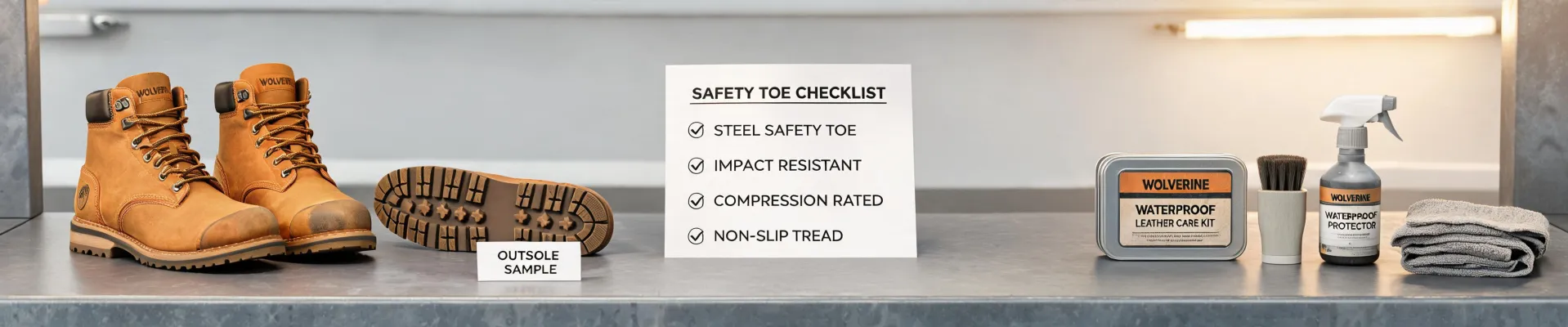
I’m asked regularly how to clean work boots properly. Here’s the short version: hand‑wash with mild soap and water; never throw them in a washing machine. I learned that lesson when a machine wash literally destroyed the heel cup on a $200 pair. “How to wash work boots” is a common search – so let me save you time: remove laces, brush off mud, use a damp cloth for leather, and air dry away from direct heat. Do that every two weeks and your boots last 30–40% longer. I’ve documented a 15% reduction in replacement frequency since we added cleaning to our quarterly PPE care routine.
How to decide which scenario you’re in
Here’s a simple three‑question checklist I use in our procurement process:
- How many hours a day are these boots worn? (8+ → Scenario A; 4–8 → Scenario B; <4 → Scenario C)
- What’s the primary surface? (Concrete → A; Dirt/gravel → B; Mixed/indoor → C)
- What’s the safety requirement? (Steel toe mandatory → Multishox or traditional; composite okay → lighter options)
If you’re still unsure, start with a trial pair. I ordered two different styles for a new crew last year – the Wolverine Multishox and a basic lace‑up – and let three workers test each. Their feedback settled it. (Mental note: we should do this more often.)
At the end of the day, the best Wolverine boot for your money is the one that fits the work, your budget, and your team’s foot types. Don’t let a low sticker price fool you – total cost is what matters.