The Surface Problem: A Boot That Doesn't Last
I took over purchasing for our maintenance crew back in 2020. My first week, I was told, “Just get the cheapest steel-toe boot you can find—$80, maybe $90. They’ll last until next season.”
That was a mistake. I won’t lie and say I spotted the problem immediately. I didn't. For the first three months, I thought I’d done a decent job. Which is the most dangerous kind of success—the kind that makes you think you’ve nailed it while you're actually building a hidden cost mountain.
What I Saw From the Outside
From the outside, it looked like our guys just needed something to protect their feet—and, well, a boot is a boot. You size it, you buy it, they wear it until the sole separates. Simple, right?
Wrong. People assume that if a boot costs less, you're just paying for the name. What they don't see is which costs are being hidden inside the tread, the lining, and the warranty. I learned that the hard way.
The Deeper Reality: What Price Hides
Here's the thing: by month six, I was ordering replacements every 18 weeks. For a crew of 12. That’s about 4 pairs per person per year. And because our vendor couldn't handle rush orders for odd sizes—usually a 15W—we'd sub from Amazon or Zappos at a 25% premium. That premium ate any “savings” from the cheap boot, plus some.
I assumed same specifications meant same durability. Turned out the inexpensive boots weren't rated for the same slip resistance or abrasion standards—ASTM F2413-18 vs a generic “safety toe” label. The men on the floor noticed. One guy’s sole separated on a wet concrete ramp. He wasn't injured, but it scared him. It scared me.
Learned never to assume the price sticker tells you what’s inside the boot.
The Real Cost (Beyond the Invoice)
When I finally sat down with our operations manager and tallied the real cost of “cheap” over 2021, the numbers weren't pretty. Our total cost of ownership—purchase price, rush shipping, early replacement, and one lost-time scare—came to roughly $3,400 for 12 workers. That’s about $283 per person per year. For $50–80 boots.
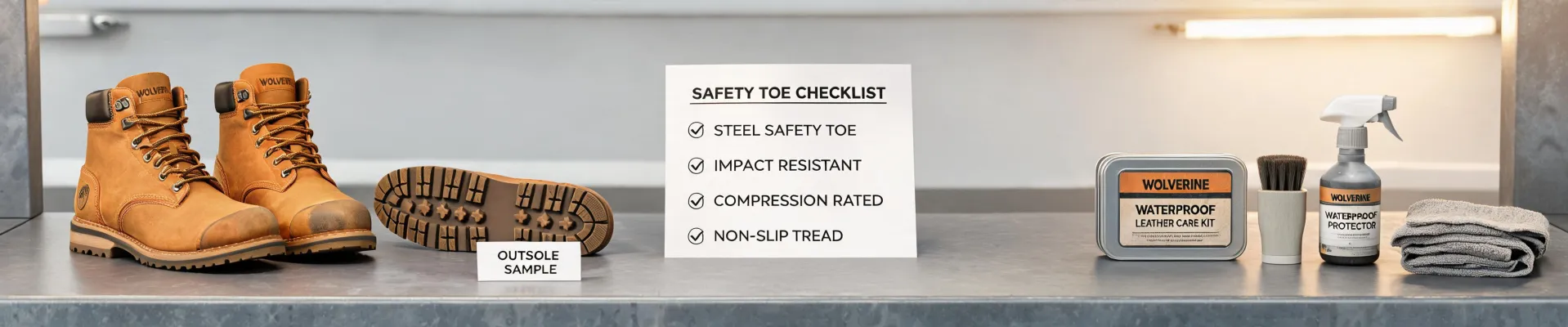
A pair of Wolverine DuraShocks would have cost roughly $120 per pair at that time. Let’s do the math: if they last 12 months—and they usually do with our work environment—that’s $120 per person per year. We were spending more on “cheap” boots than we would have on good ones.
I should add that the DuraShock boots also meet ASTM F2413-18 standards explicitly. That matters for compliance. One bad OSHA audit over missing PPE specs can cost a small company thousands in fines. Not a gamble I want to take.
Why I’m Not Saying “Just Buy Wolverine”
Look, I’m not a brand evangelist. I’ve bought Carhartt coveralls for the crew too, and they’re great for cold seasons. But when it comes to the daily, 10-hours-on-concrete work boot, I’ve found that the Wolverine DuraShock line hits a sweet spot: durable, compliant, and comfortable enough that people actually wear them—not leave them in their locker.
The numbers said go with the budget option. My gut said stick with what works. I went with my gut. Turns out my gut was doing the math my spreadsheet missed: the cost of reordering, the cost of a near-miss, the cost of a boot that fails before the season ends.
One More Thing: The Sizing Trap
I ordered 10 pairs of a popular work boot last spring. Half came back wrong size. (Should mention: our crew’s feet vary wildly—6.5 to 17.) Wolverine’s sizing list was easier to cross-reference with the workers’ existing sneakers. That saved two weeks of returns and a grumpy foreman.
The Bottom Line
So where does that leave you? If you’re a safety manager or a procurement person like me, your job isn’t to find the cheapest boot. It’s to find the one that won’t hurt your budget—or your people. Start with a short list of reputable brands that clearly state ASTM ratings. Check whether the supplier can handle odd sizes and restocks without a huge markup. And don’t be afraid to ask: “Will this boot actually last a full year with daily use on concrete?”
An informed customer asks better questions and makes faster decisions. I’d rather spend 10 minutes explaining my decision to finance than explain to a supervisor why his guy’s boot fell apart on the job.
