In my role coordinating safety gear orders for an industrial supply company, I've handled 300+ rush orders in eight years, including same-day turnarounds for manufacturing clients. The most common last-minute request? Steel toe boots. The second? Leather gloves. So I've spent a lot of time thinking about what crews actually reorder, not just what looks good in a catalog.
Wolverine boots are a staple in our warehouse. But this article isn't a brand worship piece. It's a comparison between two categories: traditional Wolverine steel toe boots and lightweight work boots. Wolverine makes both, which is exactly why I can talk about this without picking a side.
What Are We Actually Comparing?
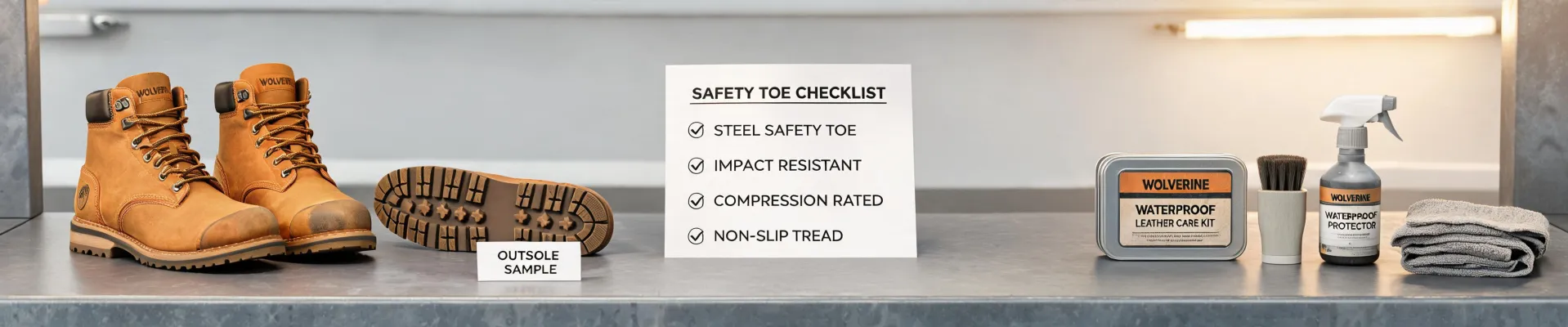
On one side, you have a classic black Wolverine work boot with a steel toe, full-grain leather, and a supportive outsole. On the other, you have a modern lightweight work boot, often with a composite or alloy toe, softer midsole, and less break-in required.
Here's what I got wrong early in my career. I assumed the heavier boot was automatically safer. A few years and a few hundred orders later, I realized the real safety variable isn't the boot alone. It's whether workers will wear them all shift. A boot that gets left in the locker protects nobody. Period.
1. Protection: Steel Toe vs. Lightweight
Steel toe boots feel invincible. But lightweight boots with composite or alloy toes can also meet impact and compression standards. Per ASTM F2413-18, impact and compression ratings are defined the same way regardless of toe material. That doesn't mean every lightweight boot is as strong as every steel toe boot. It means you need to check the rating, not just assume heavier is safer.
From the outside, lightweight boots look like the less serious choice. The reality is a composite toe can meet the same ASTM rating while weighing noticeably less. That's one of the most common misconceptions I run into.
The safety basics are simple: if your job involves heavy falling objects, get a rated steel toe or alloy toe. If your main hazard is foot fatigue and slippery floors, a rated composite toe might be the smarter play. OSHA's foot protection rule, 29 CFR 1910.136, requires ASTM-compliant footwear when hazards are present, but it doesn't mandate a specific toe material. Verify current requirements at osha.gov.
2. Weight and Fatigue: The Quiet Advantage
Weight matters. A heavy boot on a 10-hour concrete shift is a different experience than a heavy boot on uneven terrain. I don't have hard data on industry-wide fatigue rates, but based on crew feedback from 300+ orders, most workers on hard floors prefer lightweight after the first week. Not even close.
Does one pound per foot make a difference? Yes. Over 10,000 steps, it adds up. I can't cite a peer-reviewed study from memory, but I can tell you the crews reorder the lighter boots more often for long-shift work.
That said, there's a counterintuitive wrinkle. Some workers feel unstable in a lighter, squishier boot, especially on uneven ground or ladder rungs. In those environments, a traditional Wolverine work boot with a firmer outsole gives them more ground feel and confidence. Weight is a trade-off, not a scoreboard.
3. Break-In and Maintenance: Leather Is Leather
Traditional leather boots need break-in. No way around it. The good news is that Wolverine's full-grain leather and Durashock sole break in faster than cheap boots. But faster isn't instantly. If you buy a black Wolverine work boot on Friday and expect slippers on Saturday, you'll be disappointed.
Lightweight boots usually need less break-in. Some are close to comfortable out of the box. That's a real advantage when a new hire shows up without boots or your old pair dies mid-week.
This is also where leather gloves enter the conversation. The leather gloves men wear on a job site can make or break the first week. If they're stiff, the fix isn't harsher use. It's conditioning.
4. Durability and Total Cost
Here's where the traditional boot fights back. A well-built steel toe Wolverine boot can outlast two cheap lightweight pairs. The upfront cost is higher, but the cost per wear often ends up lower. I learned this the hard way. I once ordered a budget lightweight pair for a temp crew because the quote looked smart. Two soles delaminated within six weeks. The reorder cost more than the original, and I lost credibility with that crew. Lesson learned.
The lowest quoted price isn't usually the lowest total cost. When you factor in replacement, downtime, and sore feet, the heavy-duty option often wins on the jobs where heavy duty is actually required.
So Which One Should You Choose?
Here's my practical answer, based on what I see in actual orders:
- Choose traditional Wolverine steel toe boots if you're in heavy manufacturing, welding, construction, or anywhere falling objects are a real threat. You want a secure fit and long-term durability.
- Choose lightweight work boots if you're on concrete all day, covering long distances, or need a comfortable composite-toe option. If the job means walking five miles inside a facility, light wins.
- Buy both if you can. Honestly, a lot of crews do. They wear the lighter boots for regular shifts and keep the steel toes for heavy work days. That's not indecision. It's using the right tool.
Not every boot can do everything. A supplier who promises one model is perfect for every foot, every job site, and every season is overselling. Wolverine makes a range for a reason: traditional steel toe, composite toe, alloy toe, soft toe. They all have a place.
How to Soften Leather Gloves Without Ruining Them
People try to soften stiff leather gloves with heat, water, or pure brute force. That usually leads to gloves that are loose, cracked, or hard as cardboard.
Here's what works:
- Use mink oil or a dedicated leather conditioner. Apply a thin coat, work it into the palm and fingers, and let it soak overnight.
- Warm the leather gently before wearing. Not with a blowtorch or boiling water. Just flex the gloves with your hands, bend the fingers, and roll the leather. Body heat over 30-60 minutes does more than force ever will. Should mention: don't use olive oil or vegetable oil. They can rot the stitching.
- Wear them in short sessions. Twenty minutes of light work for a few days beats one eight-hour punishment session.
- Reapply conditioner regularly. A light treatment every couple of months keeps the leather flexible and prevents cracking.
This same logic applies to boots. Leather is a natural material. It needs oil, flex, and time, not abuse.
Where to Find Wolverine Steel Toe Boots
If you're in the U.S., Academy Sports + Outdoors carries a solid range of Wolverine steel toe boots. As of January 2025, I saw multiple models on their site, including the traditional black Wolverine work boots and some lighter composite-toe options. Stock changes often, so verify before you drive across town. Same with prices.
At the end of the day, the best work boot is the one your crew will actually wear, that meets the safety standard for the job, and that lasts longer than the season. That's the whole argument. Weight is a factor. So is durability. So is break-in. The answer is usually it depends, and anyone who tells you otherwise hasn't spent enough time standing on concrete in the wrong boots.