When 'Good Enough' Boots Almost Cost Us a Safety Audit
Look, I’ll be honest. When I took over purchasing for our 150-person crew in 2021, I thought work boots were work boots. Steel toe, leather, done. I figured the cheapest pair that met the ASTM standard was the responsible choice for the budget. I was wrong.
Our old supplier, a regional brand I won’t name, had decent prices. But by month six, we were getting complaints. Soles delaminating after three months on concrete. Uppers cracking. Guys complaining their feet were wet by lunch. I was spending more time processing returns and dealing with grumpy site supervisors than I was on anything else.
If I remember right, we had about 40% of our orders flagged for some kind of issue within the first year. Forty percent. That’s not a boot problem. That’s a process problem.
The real wake-up call came during a surprise OSHA-style walkthrough by our corporate safety director. He didn’t say anything directly, but he noticed the floor of our warehouse was scattered with worn-out, delaminated boots. He asked the foreman what the replacement cycle was. The foreman said, 'We just re-order when they fall apart.' That cost us credibility. That was the moment I realized I had the entire procurement model wrong.
The Real Problem Isn't Price. It's Consistency.
You might be here because you’re comparing Wolverine vs. Ariat work boots or wondering if the hype around Hoka work boots is real. Maybe your boss said, 'Just find something comfortable and cheap.' I get it. I’ve been in that exact spot.
But the deeper issue for someone in my role isn't which brand is 'best.' It's which brand is predictable. Can I re-order the same boot in six months and get the same fit, the same protection, the same supplier invoice? If the answer is no, then the lowest price is a trap.
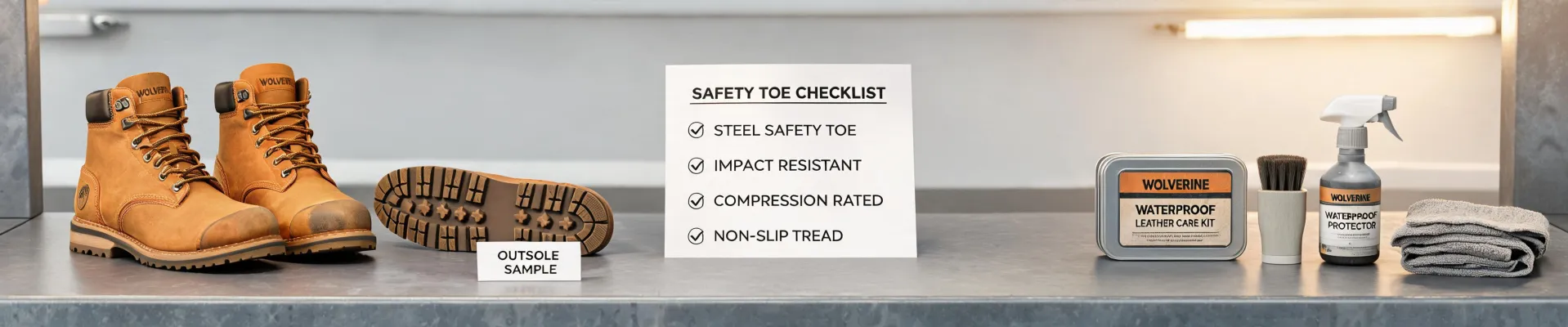
We switched to Wolverine primarily because of their product consistency. Their men’s loader work boots, for example, haven't changed their fit profile dramatically in years. That’s boring—but for procurement, boring is beautiful. When a guy asks for a replacement for his Wolverine I-90, I can order it. It fits. End of story. With the old supplier, they’d 'update' the model, and suddenly the steel toe rubbed the same guy’s pinky toe.
The 'Hoka Work Boots' Question
I’ve had a few guys request the new Hoka work boots. They look great. Super comfortable out of the box, apparently. But here’s where my job gets tricky: Hoka’s work boot line is still relatively new in the industrial space. Their supply chain isn’t as mature as Wolverine’s. Can I get a rush order of 30 pairs in 48 hours if I need to? With Wolverine, I know the answer is usually yes. With Hoka? I’m not 100% sure. That uncertainty has a real cost. I don’t have time to call five distributors to find a size run.
The Consequences of 'Cheap' (A Personal Story)
In early 2024, we had a major project deadline. We needed 60 pairs of steel-toe boots, fast. I found a deal on a new direct-to-consumer brand. Saved about $1,200 on the order. Cost me $2,400 in wasted wages.
How? The boots arrived, but the sizing was totally off. Half the guys couldn't get them on. The ones that fit didn't have proper ankle support for our scaffold work. We spent two days swapping sizes, arguing with the supplier's customer service, and eventually, the foreman pulled his guys off the scaffold because he wasn't confident in the safety gear. We lost a full day of labor. The $1,200 'savings' turned into a $2,400 loss, and that’s not including the hit to my reputation with the operations manager.
This is where the concept of 'Time Certainty Premium' comes in. In an emergency, the promise of 'delivery on Friday, period' is worth more than a discount. We now budget for that certainty. We pay a little more for the Wolverine distributor who guarantees 2-day delivery. Missed a deadline? That's not acceptable. Simple.
Wolverine vs. Ariat: A Quick Take
I know people love Ariat. Their western boots are legendary. But for our use case (warehouse and light construction), Wolverine’s Durashock sole offers better durability on concrete. Ariat has the edge in comfort for the first month, Wolverine has the edge in durability for the sixth month. I have mixed feelings about it. Part of me thinks Ariat is the better boot. Another part knows that for a B2B purchase where I need 100 pairs to look the same and last the same, Wolverine is the safer bet.
My Advice to Other Buyers
Stop asking 'Which boot is best?' Start asking 'Which supplier can deliver 60 pairs of standard boots, with proper ASTM F2413-18 ratings, on a consistent invoice, by Tuesday?' That’s the question.
For Wolverine men’s loader work boots, they check those boxes. They aren't the most exciting option anymore—Hoka and Ariat have the cool factor. But if you are managing safety gear for more than 20 people, you need boring. You need predictable.
Here’s the bottom line: I’ve made the mistake of chasing a lower price and ending up with a higher headache. Don’t do it. If you are in a position where you need to refill extinguishers or order boots for a shift, pay the premium for the supplier you trust. Your boss might not thank you for the price, but they will thank you for the delivery.