-
My Procurement Rule: Total Cost, Not Price Tag
-
Who Sells Wolverine Work Boots? (And How I Pick the Source)
-
Black Wolverine Work Boots: Why They're a Regular on My Orders
-
Moc Toe Work Boots: A Comfort Pick I Underestimated
-
Fence Company Near Me: What I Look For Before I Hire One
-
How to Clean Earplugs (And Not Make It Complicated)
-
The Bottom Line
I manage buying for a 55-person fence and site work company. That means I'm the one who tracks every invoice for boots, gloves, glasses, and earplugs. I've spent six years building cost comparisons for work gear, and I've typed more purchase orders than I care to remember.
Here's my position: The cheapest work boot is usually the most expensive boot you can buy. That sounds backwards until you run the numbers. The $45 pair that falls apart in five months isn't a bargain. It's a liability. And when a foot injury rolls through because the sole gave out or the toe cap wasn't up to the job, the savings disappear entirely.
That's why Wolverine boots keep ending up on my orders. Not because they're cheap. Because they're predictable.
My Procurement Rule: Total Cost, Not Price Tag
When I audited our 2023 spending, boot replacements stood out. We'd tried two budget-friendly brands, and each pair saved $80 at the register. But replacement frequency was higher, and we saw more downtime for 'my boots are killing my feet' days. The real cost was in replacement labor, lost productivity, and an occasional urgent care visit.
I knew I should swap out two worn pairs before a long concrete pour, but I thought 'we'll get through one more week.' That was the week both soles started separating on site. I don't skip that boot review anymore.
So I built a simple TCO spreadsheet. It includes the boot price, shipping, expected lifespan, comfort complaints, and risk of a workplace injury. When I put Wolverine boots in that spreadsheet, they usually win. Not always. Usually. And 'usually' is enough when I'm buying for a crew, not just for myself.
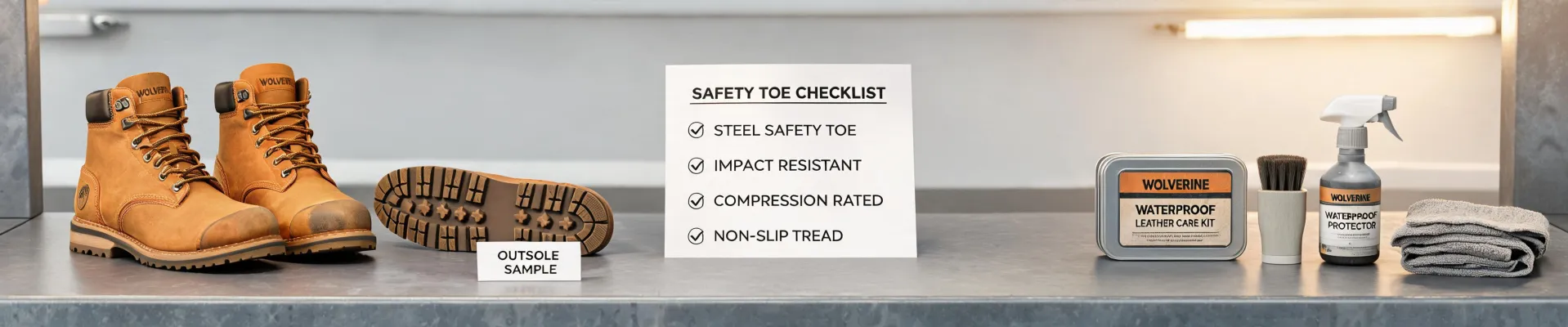
I also look for the basics before a boot makes the list: ASTM F2413-18 steel toe protection when needed, waterproofing, slip-resistant outsoles, and enough ankle support for uneven ground. Wolverine hits those specs across a lot of styles.
Who Sells Wolverine Work Boots? (And How I Pick the Source)
'Who sells Wolverine work boots?' is a question I get from newer safety managers all the time. My answer: start with Wolverine's own site and store locator. They'll point you to authorized local dealers, and a local workwear shop is a good place to try boots on before buying for the whole crew.
I also order online from Wolverine.com and a few authorized retailers. Shipping costs matter too. I've seen a great advertised price disappear once freight showed up, so the TCO spreadsheet always checks the final landed cost. What I don't do is chase suspiciously low-priced listings from random marketplace sellers. Counterfeit safety footwear exists, and a fake ASTM label won't protect anyone. If a deal looks too good to be true, I treat it as a red flag.
Black Wolverine Work Boots: Why They're a Regular on My Orders
Black Wolverine work boots show up on nearly every order I place. They're common for a reason. Many job sites require all-black footwear, and black hides mud and concrete dust better than tan or brown. They also look more professional when a crew walks into a customer's yard. Perception matters in construction. I'm not 100% sure why some facility managers insist on all-black boots, but I don't argue with their site rules. I just order the right color.
Moc Toe Work Boots: A Comfort Pick I Underestimated
I used to think moc toe work boots were more style than substance. That changed after a foreman wore a pair of Wolverine moc toe boots through an entire fence project and asked for the same pair again. There's something about the wider toe box and the way the boot flexes that some people love.
Moc toe work boots aren't right for everyone. But for crews that work on their feet all day on gravel, concrete, and packed dirt, the extra room in the toe area can make a real difference. Just check whether the site requires a steel toe or allows soft toe before ordering.
Fence Company Near Me: What I Look For Before I Hire One
When someone types 'fence company near me' into Google, they're looking for a crew to build a fence. They're not thinking about boots. But as someone who has spent years inside a fencing operation, I am. Boots are one of the clearest signs of how a company treats its people.
A crew that shows up in solid, maintained work boots is usually the same crew that sets posts straight and cleans up the site. A crew in busted boots is a warning. I remember one bid call where a guy in broken boots asked for a deposit check. I passed. Bad footwear doesn't automatically mean bad work, but it tells you the company has cut corners somewhere.
How to Clean Earplugs (And Not Make It Complicated)
Here's the PPE question I get more than any other: how to clean earplugs. It matters more than people think. Dirty earplugs don't fit as well, and a poor fit means poor protection. Hearing damage doesn't wait for a convenient time.
Simple answer: if they're disposable foam earplugs, don't wash them. Replace them. A box of foam earplugs is cheap; hearing loss isn't. For reusable silicone earplugs, wash them with warm water and mild soap, remove any wax, rinse thoroughly, and let them air dry completely. Don't use harsh solvents or alcohol, because they can break down the material and change the fit.
I'd rather spend two minutes explaining this than send someone back to the field with degraded earplugs. OSHA's general PPE rules (osha.gov) expect you to keep protective equipment clean and reliable. That's not just paperwork. It's common sense.
The Bottom Line
I'm not saying Wolverine boots are perfect. There are bad fits for certain feet, and no boot lasts forever. But when I compare total cost, durability, and the daily reality of a crew that works outside, Wolverine keeps proving itself. They're not the cheapest boots on the shelf. That's the point.
So, who sells Wolverine work boots? Start with Wolverine's store locator, verify the seller, and buy the style that matches the job. Black work boots if the site requires them. Moc toe work boots if the crew wants the roomier feel. And when the earplug question comes up, keep it simple: wash the silicone ones, replace the foam ones, and don't overthink it. Informed buyers make better decisions. And better decisions are usually cheaper in the long run.