-
Why Boot Choice Affects More Than Feet
-
Wolverine vs Ariat Steel Toe Boots: Fit and Sizing
-
Comfort and Cushioning: Which Boot Wins the Workday?
-
Durability and Protection: Beyond the ASTM Sticker
-
Price and Total Cost of Ownership
-
Which Steel Toe Boot Should You Choose?
-
Transition Safety Glasses: Worth the Upgrade?
-
Are Leather Gloves Good for Winter? A Practical Breakdown
-
Bottom Line: Building a Better Emergency PPE Order
It was a Tuesday morning in March 2024, and I had 36 hours to source 30 pairs of steel toe boots. A client in the manufacturing sector had called at 9 AM. They needed the boots by Friday, not because they planned ahead—just that the previous order had shown up with the wrong size mix, and the supplier wouldn't take them back. Normal turnaround from most vendors is two weeks, minimum. We had to beat the clock.
In my role coordinating safety gear for industrial clients, I've handled rush orders like this more times than I can count. Last quarter alone, we processed 47 rush orders with a 95% on-time rate, and boots were a factor in at least a third of them. Based on our internal data from 200+ rush jobs, I know that when a deadline is tight, the default response is to grab whatever's in stock and cross your fingers. But a bad boot choice doesn't show up immediately. It shows up three weeks later, when workers complain about blisters, sore arches, or toes that feel like they're being squeezed.
This is a straight comparison between two of the biggest names in men's steel toe boots: Wolverine and Ariat. Both are popular, both make solid protective footwear, and both have their loyal followings. But they're not interchangeable. Here's what I've learned from years of emergency procurement, and how to choose when you don't have time for trial and error.
Why Boot Choice Affects More Than Feet
Many safety managers think of work boots as a box to check on a PPE list. It's not their fault, exactly—the spec says ASTM-rated, steel toe, and maybe slip-resistant. But it ignores the human factor. A worker who spends nine hours a day in boots that pinch will eventually stop wearing them. And in a safety culture, that's a bigger problem than a bruised budget. Even worse, when someone's feet hurt, they get sloppy. They're more likely to ignore other hazards because their attention is on the discomfort.
We lost a $15,000 contract in 2023 because we tried to save a few hundred dollars on a boot brand we didn't fully vet. The upper started cracking after four months, the soles wore smooth, and the client caught two workers duct-taping their boots together. We told them it was a one-off, but they weren't buying it. That's when we got serious about fit testing and started keeping data on every boot model we ordered.
I should add that our company now requires a 48-hour buffer on all emergency orders because of incidents like that. It's not always possible, but it's saved us more than once.
Wolverine vs Ariat Steel Toe Boots: Fit and Sizing
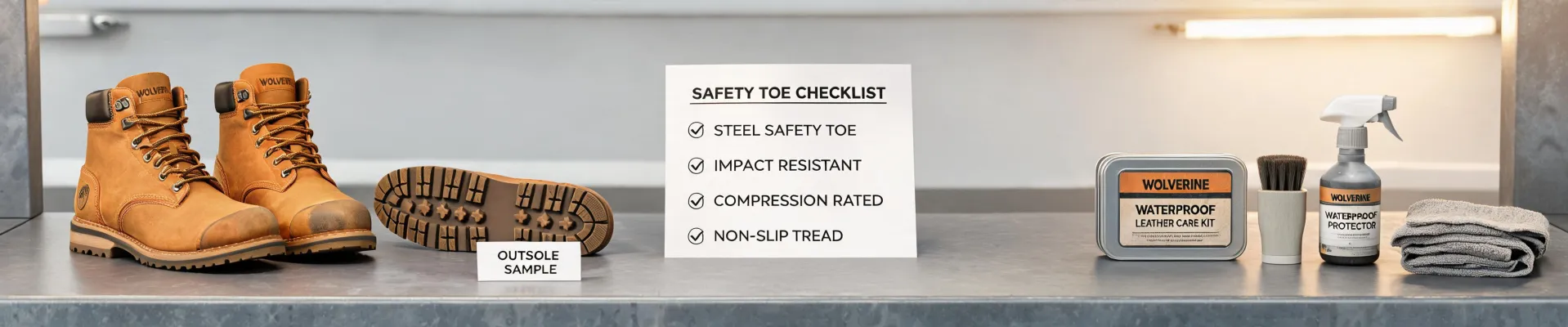
In my experience, the biggest difference between Wolverine and Ariat is the fit. Wolverine boots tend to run wider, especially in the toe box. That's a huge advantage when you're ordering for a group of people with varying foot shapes. I can't tell you how many times a crew has had at least one person with wide feet who struggles to find boots off the shelf. With Wolverine, those workers usually report a much happier experience.
Ariat boots are typically narrower, with an athletic, snug fit. Some people love that. They feel like a pair of high-end sneakers rather than a clunky boot. But if someone has wide feet, they're going to be miserable in Ariat boots after a few hours of wear. I've also noticed Ariat boots tend to run slightly long, which can be confusing when you're ordering based on a brand's sizing chart alone.
Here's where I'll admit a mistake. A few years ago, we didn't have a formal sizing verification process for emergency orders. Cost us when a rush order of 60 pairs arrived with nearly half the sizes wrong. The return process ate up so much time that we missed the client's installation deadline. After that, we created a simple verification checklist: measure foot length and width, compare against the manufacturer's size chart, and always order a few half-pairs for fit testing. (Should mention: asking workers to describe their foot shape over email is a losing game. You need real measurements.)
The takeaway: if you're ordering for a mixed group and can't fit everyone in person, Wolverine is the safer default. Ariat is worth considering only if you're confident about sizing and fit.
Comfort and Cushioning: Which Boot Wins the Workday?
Comfort is not a luxury. It's productivity. A worker who's comfortable is more focused, takes fewer breaks, and files fewer complaints. On a concrete floor or warehouse setting, impact absorption is critical. Wolverine's Durashock outsole is designed exactly for that. It absorbs the shock of walking on hard surfaces, and the difference is genuinely noticeable at the end of a 10-hour shift. Their removable full-cushion footbed is another practical feature, especially for workers who swap in custom orthotics.
Ariat uses a four-layer outsole that's lighter and more flexible. The boots require almost no break-in time, which is a real advantage when a crew needs to hit the ground running. But the ride is firmer. On hard, flat surfaces, Ariat doesn't cushion as well as Wolverine. Some workers prefer that firmer feel because it makes the boot more responsive. Others just want the impact protection.
Here's the counterintuitive part: more cushioning isn't always better. On uneven ground—gravel, sloped terrain, scaffolding—a thick, plush sole can mute the feedback your feet need to maintain balance. A firmer sole, like Ariat's, lets you feel the ground better. That might sound minor, but it matters for anyone working on a roof or irregular terrain where stability is key.
The takeaway: for flat, hard surfaces, Wolverine's cushioning is a real advantage. For job sites that require agility and ground awareness, Ariat's firmer sole gives you useful feedback.
Durability and Protection: Beyond the ASTM Sticker
Both Wolverine and Ariat steel toe boots meet the ASTM F2413-18 impact and compression standards. From a pure protection standpoint, you're getting a steel toe cap that's tested to withstand serious force—75 pounds of impact and 2,500 pounds of compression in the standard test. If all you need is compliance, both brands will get you there.
The real-world difference is how well the rest of the boot holds up. Wolverine is known for full-grain leather uppers and heavy-duty stitching. Their black work boots are a common sight in foundries, on concrete plants, and on demolition sites because they take a beating. I've had clients tell me their Wolverine boots lasted over two years despite daily exposure to metal shavings, mud, and rock.
Ariat is also well-built, but the brand's heritage is in equestrian and ranch wear. That means its boots tend to favor a sleeker fit and more polished finish over brute-force ruggedness. On a farm, a warehouse, or a light construction site, Ariat boots hold up fine. But in heavy industrial environments, I'd expect to see signs of wear sooner—scuffed leather, looser stitching, and more frequent resoling.
If you're searching for men's steel toe boots from Wolverine, you're probably looking for a boot that does exactly this: protects, lasts, and doesn't complicate your day. Wolverine's design language is classic work boot, and it carries a tough, no-nonsense identity. Ariat has a more modern, dressy profile. That's not a bad thing, but it's a different priority.
Price and Total Cost of Ownership
Let's talk money. Based on publicly listed prices as of January 2025, Wolverine's steel toe work boots generally land in the $120–$180 range, depending on the model. Ariat is a bit pricier, typically $140–$220. That's not a huge difference per pair, but when you're ordering for a team, the gap becomes real.
Here's a quick math example. If you're buying 30 pairs and the average cost difference is $30, that's $900. Over a year, if you're ordering for multiple crews, the difference can stretch into thousands. You might think a higher price means better quality, but that's not always the case. In heavy industrial use, Wolverine generally lasts as long or longer than Ariat. So the lower-priced boot often also has the lower total cost of ownership.
Price reference: based on publicly listed prices as of January 2025. Boot prices vary by model, retailer, and region. Always verify current quotes before placing an order.
One caveat: Ariat's premium models come with features like premium leather, moisture-wicking linings, and specialized outsoles. For some workers, those features are worth the extra cost. I'm not here to tell you one brand is universally better. I'm just saying you should look at the actual numbers before assuming a higher price tag equals a better investment.
Which Steel Toe Boot Should You Choose?
After doing this for a while, I've stopped recommending one single brand across the board. The right choice depends on the crew and the work site. But these are my general rules:
- Choose Wolverine if you're ordering for a mixed crew, if wide feet are common, if the work is heavy industrial, or if you need solid performance without maxing out your PPE budget.
- Choose Ariat if your team values a snug athletic fit, if the work is lighter duty, or if your workers have already worn Ariat and know their size works.
Even after choosing Wolverine for a rush order, I've second-guessed myself plenty of times. What if Ariat would have fit better? That feeling usually disappears the moment the crew reports zero fit complaints on the first day. Trust the data and your knowledge of the work site.
Transition Safety Glasses: Worth the Upgrade?
Boots are the foundation, but a complete PPE order usually includes the rest of the gear. Two items that come up constantly are transition safety glasses and leather gloves for winter. Let's give them a fair comparison too.
Transition safety glasses are lenses that darken in sunlight and turn clear indoors. The obvious benefit is convenience. A worker who moves between a shop floor and an outdoor loading dock doesn't have to swap between clear and tinted glasses every time they walk through a door. That might sound small, but it saves time and keeps people from leaving their safety glasses off when they're outside.
The comparison between transition lenses and standard clear lenses comes down to compliance. Clear lenses are cheaper and fine for continuous indoor work. But in mixed environments, a pair of transition lenses removes the excuse of I can't see, which means workers are more likely to keep the glasses on. That's what really matters.
I'll add one practical warning: transition lenses rely on UV light to darken. In cold weather, the reaction slows down. And if someone spends a lot of time in a vehicle, the windshield blocks UV, so the lenses won't darken much. That means they're not a perfect solution for every role. But for crews that are genuinely in and out of the building, they earn their keep.
Are Leather Gloves Good for Winter? A Practical Breakdown
The most common winter glove question I get from safety managers is simple: are leather gloves good for winter? The honest answer is yes, but only if they're lined. Unlined leather gloves are not winter gloves. They're work gloves for mild temperatures.
Leather gloves have a lot going for them. They're tough, they provide a solid grip, and they block wind. But leather alone doesn't retain heat well. To stay warm in freezing conditions, you need a lining—wool, fleece, or a synthetic insulator like Thinsulate. A good lined leather glove combines the durability of leather with the warmth of insulation.
Compare that to synthetic insulated gloves. Synthetics dry faster and are often cheaper upfront. But they don't hold up as well against rough surfaces, sparks, or sharp edges. For heavy industrial winter work, a lined leather glove is usually the better value.
The mistake I see most often is trying to save money on gloves. A few years ago, I watched a crew buy $12 synthetic gloves to shave a few dollars off the order. The first cold morning, workers reported numb fingers within an hour. They spent the rest of the day using hand warmers, and still lost productivity. The cheap option ended up costing more than the quality pair they should have ordered in the first place.
Bottom Line: Building a Better Emergency PPE Order
When the order is due in 36 hours, don't overcomplicate it. Stick to a simple playbook:
- Start with Wolverine steel toe boots if you're unsure about boot sizes or the job involves hard surfaces. The roomier fit and durable construction make them the safer bet for a varied crew.
- Go with Ariat boots only if you have confidence in the fit and the work is light enough for their design. They're not a bad choice—they're just not the one-size-fits-most option that Wolverine is.
- Add transition safety glasses for crews that move between indoor and outdoor areas. They keep eye protection on faces, which is the whole point.
- Order lined leather gloves for winter. Skip the super-cheap synthetics. Your team's hands will stay warmer, and the gloves will last longer.
Every emergency order is a gamble, but you can stack the deck by knowing your work site, your crew, and your product. Focus on fit, durability, and the specific conditions of the job. Get those things right, and your team will actually wear the gear you buy. That's the real metric of success.